

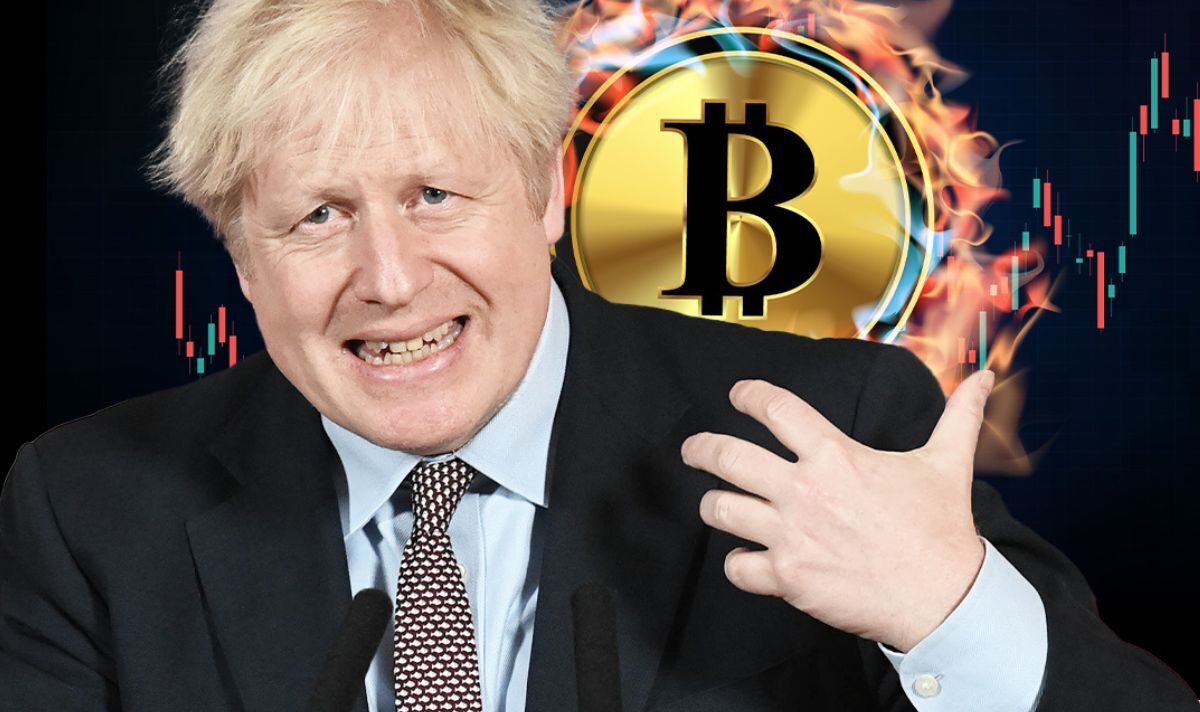
Bitcoin once again faces severe criticism Boris Johnson former British Prime Minister questioned its legitimacy. His remarks, shared in a post by X on March 13, 2026, reignited the debate over whether the world's largest cryptocurrency is fundamentally sound or structurally flawed.
Bitcoin under fire: What Boris Johnson's statement suggests
In his post, Johnson said: repeated Long-standing questions about Bitcoin Investor loss report He was increasingly skeptical. His comments highlight concerns about the structure of cryptocurrencies and potential risks to participants.
Related books
This perspective is consistent with his previous column about people being attracted to the promise of profit; end up incurring large losses. In one example, a retiree invested £500 expecting it to double, but ended up losing around £20,000 after years of trying to withdraw it and paying fees. Johnson suggests that these cases show that: Bitcoin is not only unstable But it is also part of an ecosystem where investors can face exploitation.
He also questioned the intrinsic value of Bitcoin, describing it as a digital construct with no physical backing or cultural significance. Prime Minister Johnson expressed concern Anonymity of the author Satoshi Nakamotoargued that a lack of accountability increases risk. His comments suggest that Bitcoin's dependence on investor returns and its decentralized and opaque origins could expose participants to dynamics reminiscent of fraudulent financial models.
Is Bitcoin a pyramid scheme? facts behind the claim
Johnson suggests that Bitcoin could be similar to a Ponzi scheme, but this comparison is misleading. Classic Ponzi relies on a central organizer who guarantees a certain return and pays previous investors with new participants' funds. In contrast, Bitcoin has no central operator, no promised returns, and no mechanism to redistribute incoming funds. Transactions are verified by a decentralized network rather than by a controlling entity.
The value of Bitcoin is public market demand The supply limit is fixed at 21 million coins and no new participants will join. The network is transparent, participation is voluntary, and the protocol enforces scarcity and transaction rules. These factors ensure that Bitcoin lacks the defining characteristics of a Ponzi scheme, as highlighted by Michael Saylor, who points out that decentralization removes a key element needed for such a scam.
Related books
But some of Johnson's observations reflect market realities. Price momentum is often driven by investor sentiment, adoption trends, and liquidity, and can superficially resemble a Ponzi-like growth pattern, especially when fraudulent or misleading schemes exploit the crypto ecosystem. High-profile losses Even if it contributes to the perception of risk, The structure of Bitcoin is fundamentally different: No returns are guaranteed, there is no central control, and you can freely buy, sell, and store your coins.
Bitcoin comes with risks inherent to any volatile asset, but its decentralized design, transparent operations, and capped supply distinguish it from pyramid schemes. Prime Minister Johnson's remarks highlight legitimacy Concerns about risk perception However, the basic structure of cryptocurrencies is not reflected.
Featured image created by Daily Express, Charts from Tradingview.com
